

Why property owners need to think beyond maintenance and start managing the full life of their assets
A Building Does Not Stop Aging Because It Is New
A newly completed property often feels like the finish line. Construction is complete, the finishes are polished, the systems are commissioned and the keys are handed over. For the owner, however, this is not the end of the property’s journey. It is the beginning of its longest phase: operation.
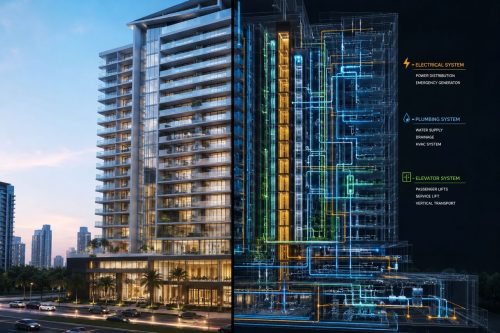
Every property ages. Electrical systems wear. Pumps lose efficiency. Generators require servicing. Elevators, air-conditioning systems, plumbing networks, roofs, façades, finishes, drainage and security systems all experience use, weather and time. The real question is not whether a property will age, but whether its ageing will be managed deliberately.
This distinction matters because a property is not one single asset. It is a collection of interconnected systems, each with its own condition, maintenance requirements, useful life and replacement cycle.
What Does “Managing Its Age” Actually Mean?
Managing a property’s age means understanding how its assets change over time and planning for those changes before they become expensive emergencies. It goes beyond fixing what has already failed. It involves knowing what is installed, how it is performing, what has been repaired, what is likely to require attention next and when major renewal may become necessary.
A generator may need significant intervention long before the building structure does. A water pump can fail repeatedly because of an underlying issue. An elevator may require upgrades as usage increases. Waterproofing may deteriorate gradually before a leak becomes visible. When these patterns are documented and monitored, property managers can make better decisions about maintenance, refurbishment and replacement.
In other words, good property management is not simply about keeping a building running today. It is about keeping it fit for purpose tomorrow.
The Hidden Cost of Letting a Building Age Unmanaged
The most expensive property problem is not always the dramatic breakdown. Often, it is the accumulation of small issues that were ignored, poorly documented or treated as isolated repairs.
When management is purely reactive, the priority becomes restoring service as quickly as possible. A failed pump is replaced, a leaking pipe is repaired, a faulty light is changed and a generator is serviced after a major fault. The immediate problem disappears, but the history behind the problem may remain unknown.
Over time, repeated emergency repairs can cost more than planned maintenance. Unplanned downtime can disrupt residents and tenants, emergency procurement can be more expensive, and neglected equipment can place additional pressure on other systems. The property may remain operational while quietly becoming more expensive to operate.
The Shift: From Reactive Maintenance to Lifecycle Management
Reactive maintenance asks: “What has broken?”
Preventive maintenance asks: “What needs attention before it breaks?”
Lifecycle management asks the bigger question: “What will this asset need throughout its useful life, and how should we prepare for it?”
That shift encourages property owners and managers to maintain asset registers, record service history, conduct routine inspections, monitor condition and plan future expenditure. It turns maintenance information into a management tool rather than a collection of emergency records.
Know What You Own Before You Can Manage It
A lifecycle-minded property owner should have clear visibility into the major systems that keep a building operational. At a minimum, management should know what equipment exists, where it is located, when it was installed or commissioned, how often it is serviced, its current condition, its criticality and its expected replacement horizon.
This information is the foundation of an effective asset register. Without it, decisions can become reactive and budgets can be difficult to forecast. With it, management can identify recurring faults, prioritise critical equipment and plan major works before failure forces the decision.
The Property Owner’s Five-Question Test
- Do we have an up-to-date asset register for the property?
- Can we see the maintenance history of our critical equipment?
- Which assets are approaching major servicing or replacement?
- Are we spending too much on repeated repairs?
- Do we have a realistic plan for future refurbishment and renewal?
Why This Matters in Lagos
In Lagos, property operations can be particularly demanding. Residential, commercial and mixed-use buildings depend on critical infrastructure such as power systems, water pumps, elevators, cooling systems, drainage, security equipment and other mechanical and electrical installations. Keeping these systems reliable requires consistent operational oversight, not occasional intervention.
For premium properties, the consequences can extend beyond repair costs. Poorly maintained common areas, unreliable services, recurring faults and visible deterioration can affect occupant experience, tenant satisfaction and the perceived quality of the property. A building may still be physically standing while its operational value is gradually declining.
This is why property management should consider both the physical condition of the building and the quality of the experience it delivers.
Aging Well Is a Management Strategy
A well-managed property does not remain “new” forever. Instead, it ages predictably. Its critical assets are known, maintenance is scheduled, recurring faults are analysed, major expenditure is anticipated and improvements are prioritised based on risk, condition and operational importance.
Technology can strengthen this approach by helping property managers organise asset records, service schedules, work orders, inspections and performance information. The goal is not technology for its own sake; the goal is better visibility and better decisions.
Conclusion: Manage the Age. Protect the Asset.
Every property owner is managing an ageing asset, whether there is a lifecycle strategy in place or not. The difference is whether the ageing process is anticipated or discovered through breakdowns.
At Fieldco Limited, we believe property value is protected not only by location, architecture or finishes, but by how intelligently a property is managed throughout its life. Effective property and facilities management should preserve performance, control avoidable costs, improve occupant experience and help owners plan confidently for the future.
Your property is an asset. Its age is inevitable. How you manage that age is a choice.